
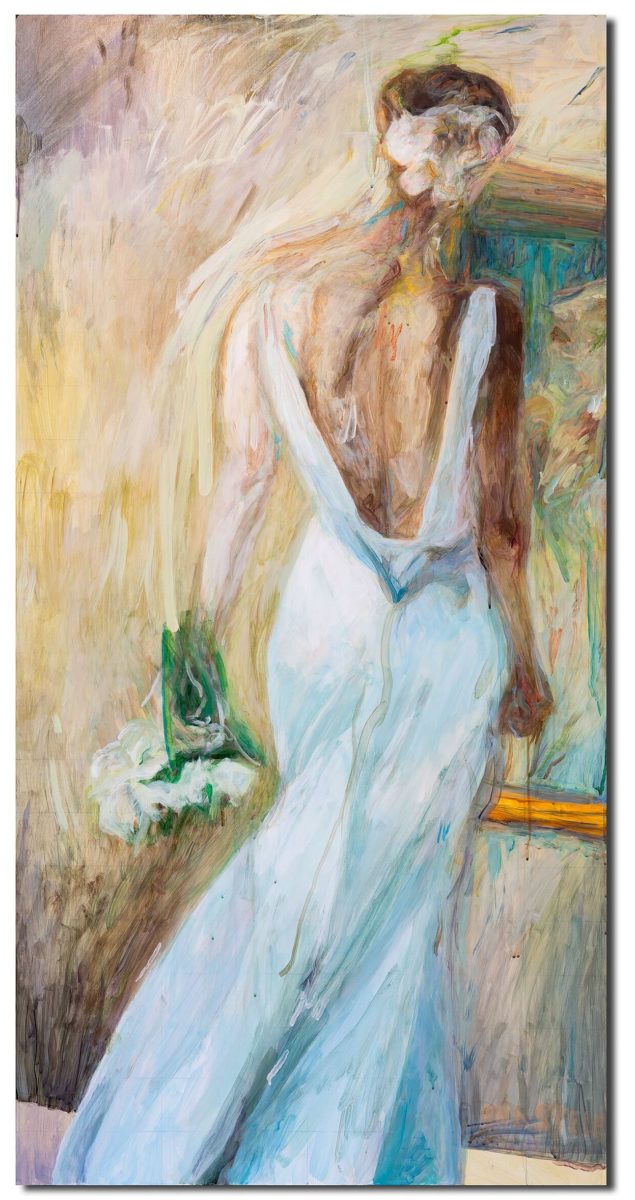
Arrested on the brink of an irreversible commitment, a bride stands with her back to us, her white silk slip half bridal gown, half shroud. Rendered in bruised ocher and raw impasto, The Mistake captures the precise, suffocating moment when “I do” curdles into “Why did I?”
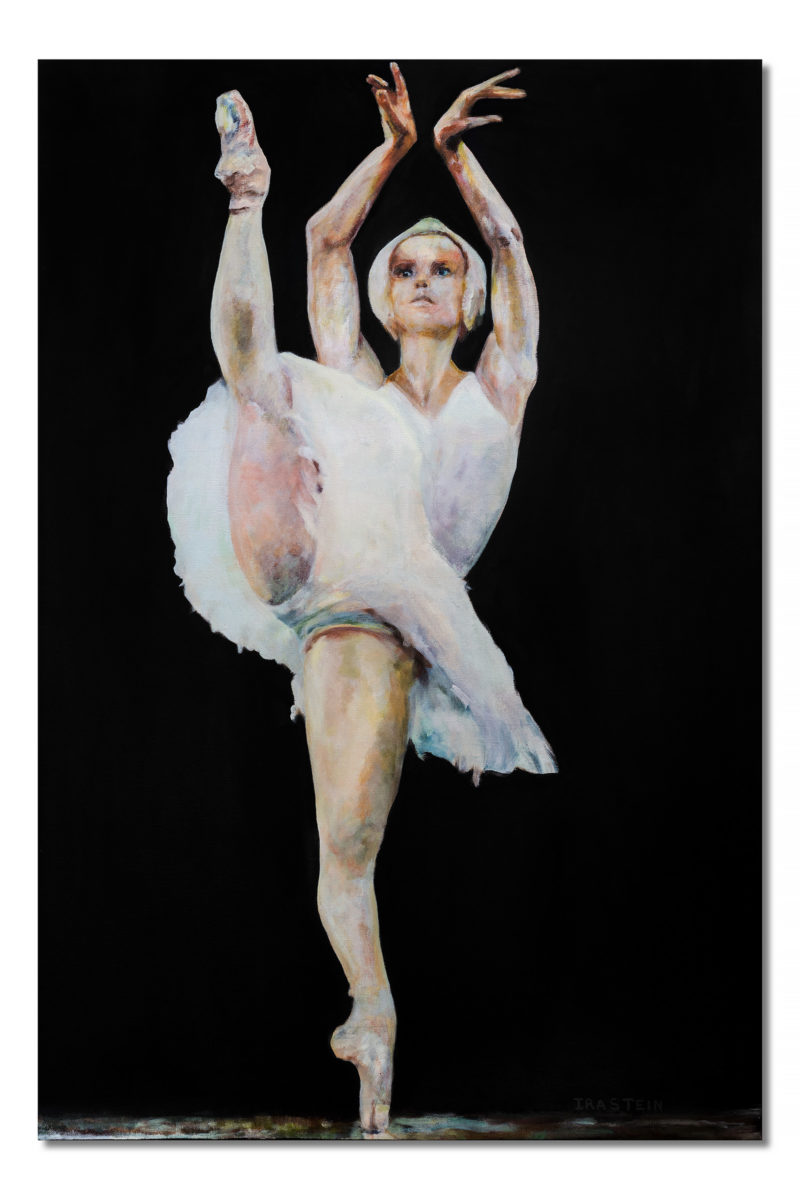
Sylvie” is almost certainly a tribute to Sylvie Guillem, one of the most celebrated ballerinas of the modern era (not the 1920s). Born in 1965 in Paris, Guillem rose meteorically through the ranks of the Paris Opera Ballet, becoming an étoile (star) at age 19 in 1984—the youngest in the company’s history at the time—thanks in large part to Rudolf Nureyev’s mentorship and promotion. She was renowned for her extraordinary flexibility (often called “the legs”), technical precision, rebellious spirit (nicknamed “Mademoiselle Non” for rejecting roles she didn’t connect with), and willingness to bridge classical and contemporary dance. She performed with major companies like the Royal Ballet and later pursued independent projects before retiring in 2015. Many consider her among the greatest dancers of the late 20th/early 21st century for revolutionizing perceptions of what a ballerina could be—athletic, intellectual, and uncompromising.
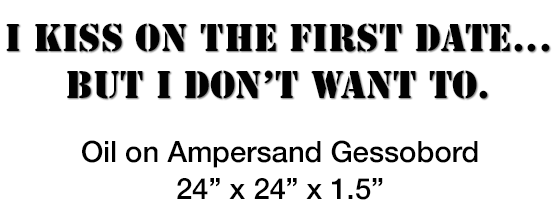
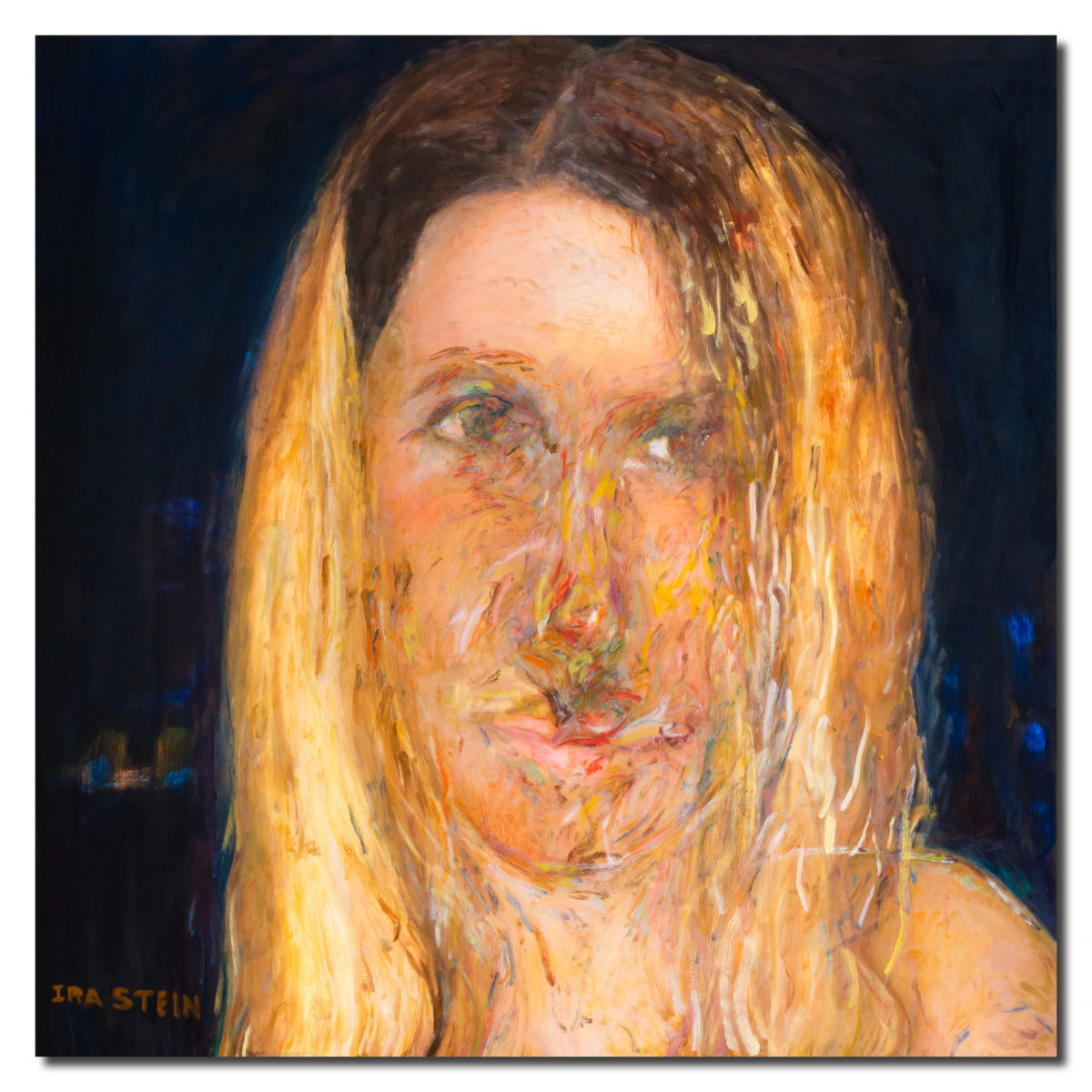
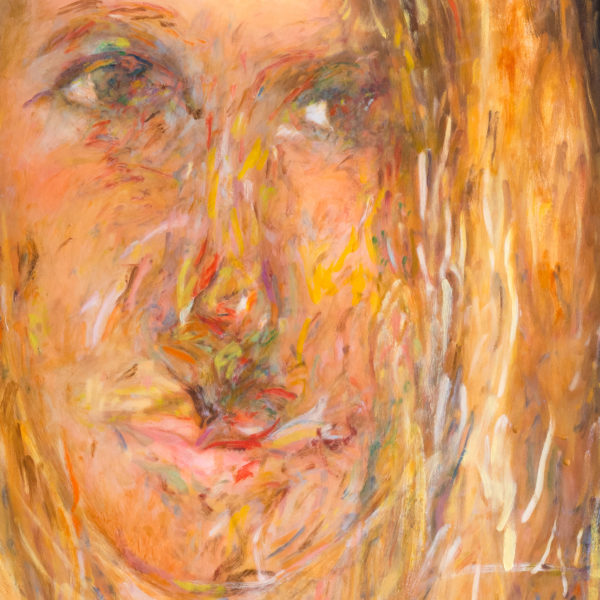
I KISS ON THE FIRST DATE… BUT I DON’T WANT TO
Two years after her first portrait, Colette returns not with a rehearsal, but a confession. Rendered in frantic slashes of rose and raw sienna, I Kiss on the First Date… lays bare the quiet, self-destructive panic of performative intimacy—the desperate ploy to make people stay before they notice you’re drowning.

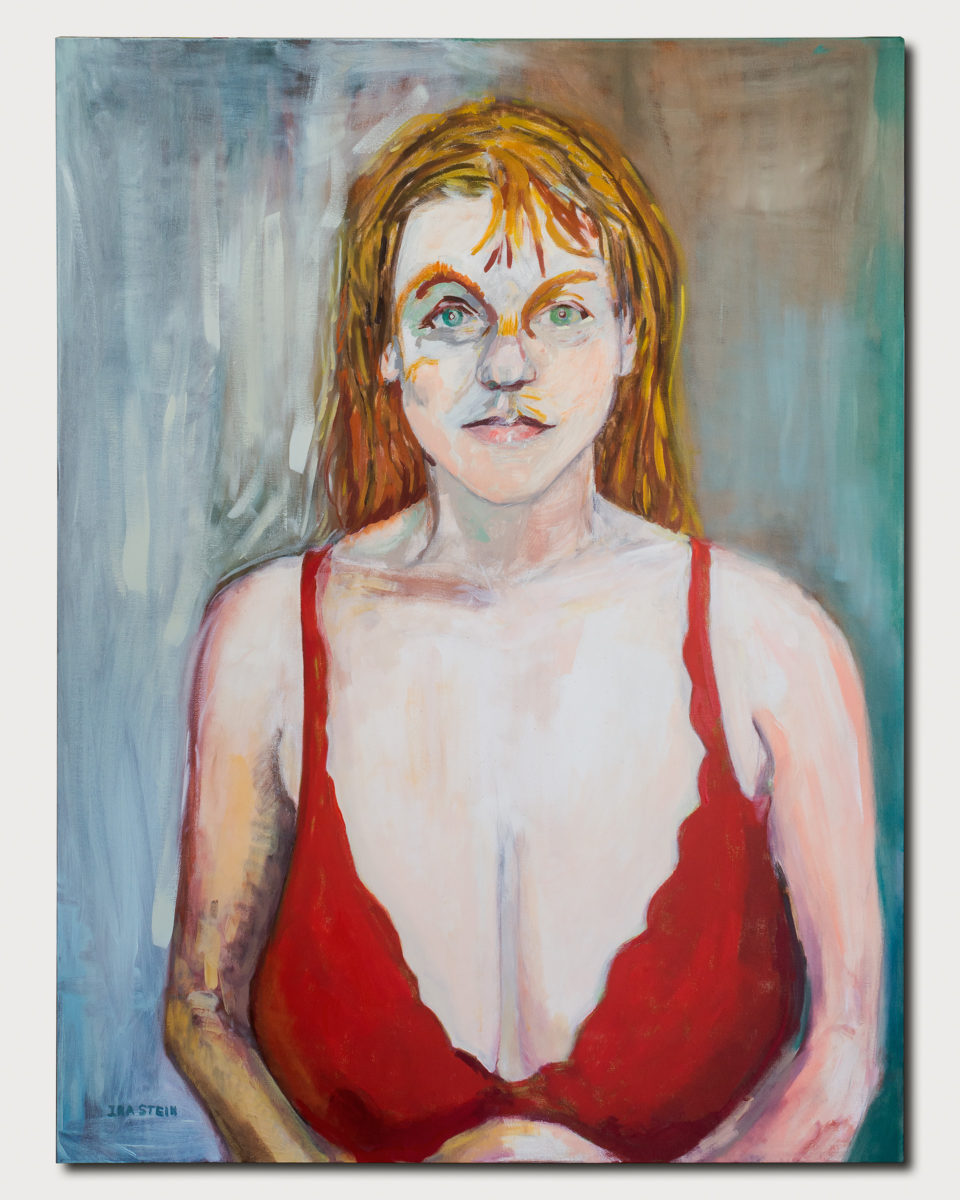
Do You Know Me?
Do You Know Me? is not empowerment—it is an indictment. UCLA film grad Susan Rich confronts us in a blood-red scalloped bra, presenting the very physical currency traded for her personhood alongside the silent inheritance of mental illness. Nothing is airbrushed; nothing is forgiven.

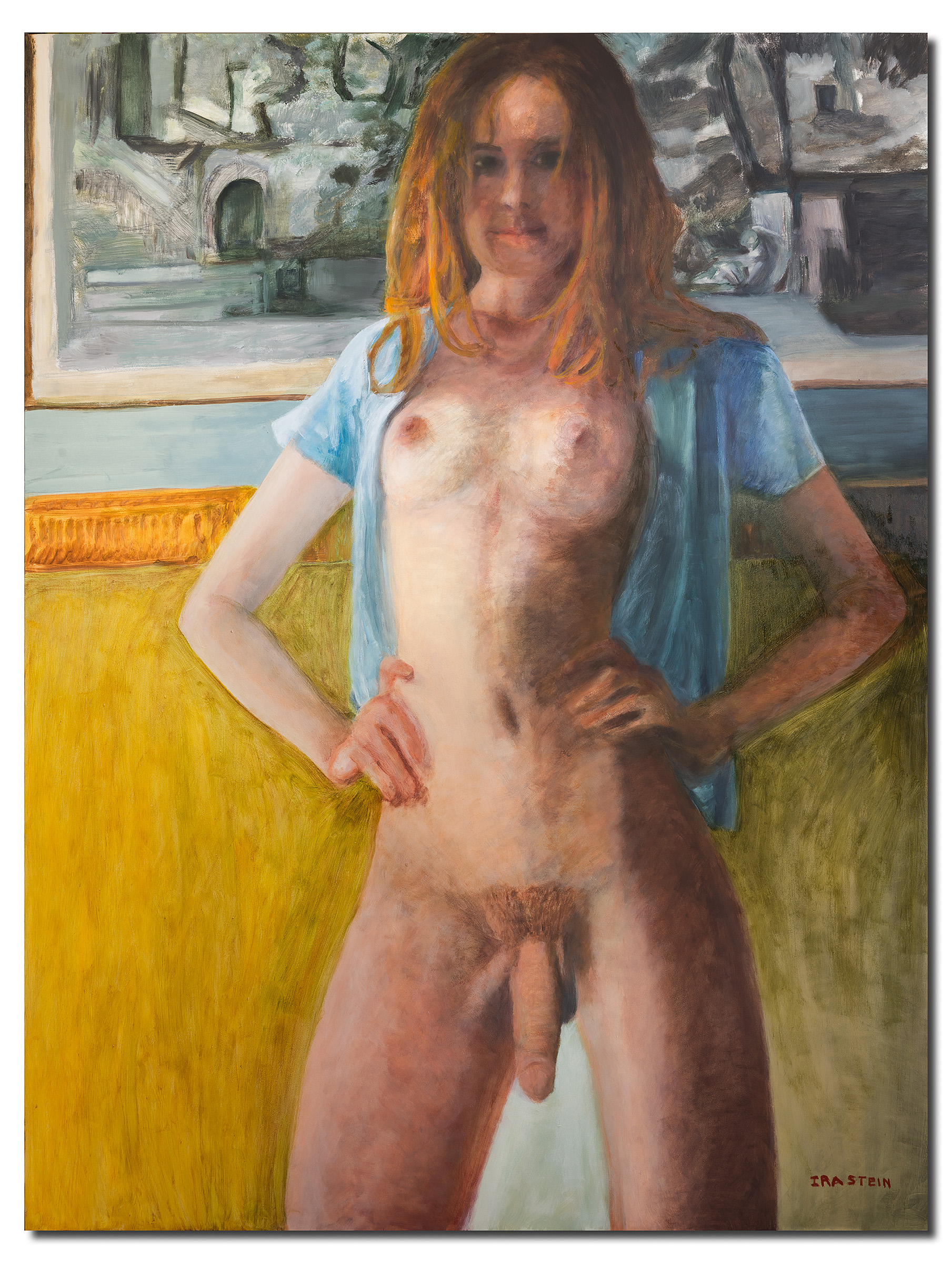
I wanted to do a piece of art on a transgender person because that speaks directly to genetics. During our sessions, we talked about her way of life and her unique perspective on gender identity.
MIKE sees herself as a beautiful woman with a penis. She realized at an early age that men found her fascinating and would pay to be with her. She now is in very high demand as an escort and has a marvelous lifestyle. She says what makes her truly unique are her female qualities combined with extraordinary male characteristics – such as wanting and loving sex. She boasts that she can always get an erection and always achieve an orgasm. She says, “I’m so thankful that God made me this way.”
Let me ask you,
Do you know what a transgender person is? Do you know the difference between transgender and hermaphrodite?
What would you do if you were on a date with a beautiful woman and you discovered she had a penis?

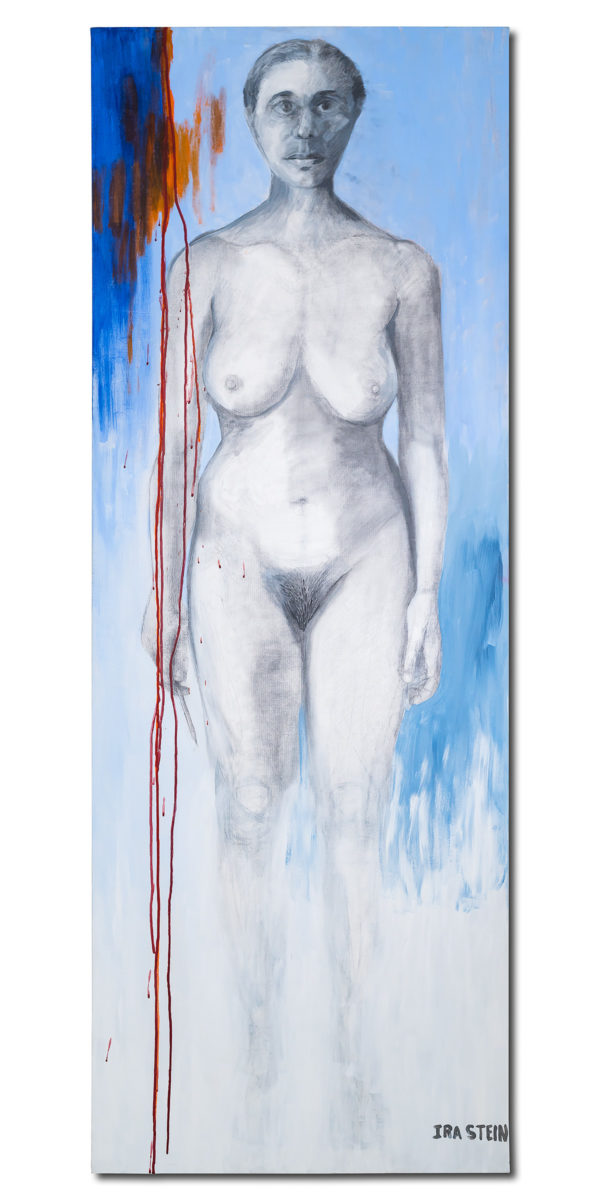
Girl With A Pencil
The first thing you notice is the wound that isn’t there. A single, viscous rivulet of alizarin crimson drips from the left edge, thick as fresh blood, then peters out halfway down the canvas like a scream that lost its voice. Beside it stands Rhonda—naked, monumental, gray as ash. Stein has rubbed graphite into the paint until her skin feels powdered with memory. No nipples, no navel, only the faintest dark triangle at the pubis: the body reduced to evidence.

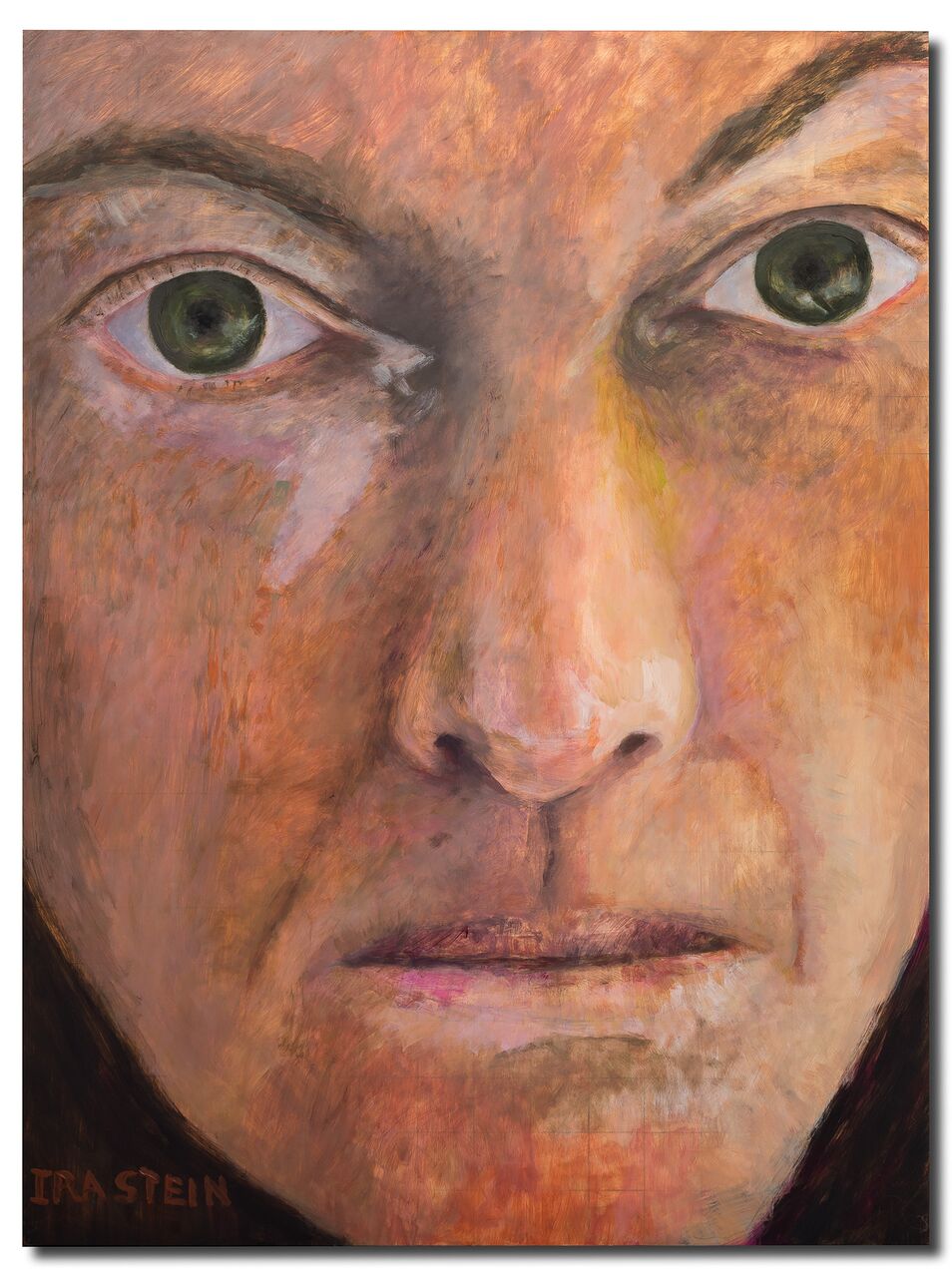
I HATE HIM
A face stripped of mercy, floating in a furnace of old blood and cross-hatched fury. Stein captures the silent, flinching weight of inherited violence—the moment a woman’s flat statement of contempt hides the one question no child should carry: Why wasn’t hating him enough to make him stop?
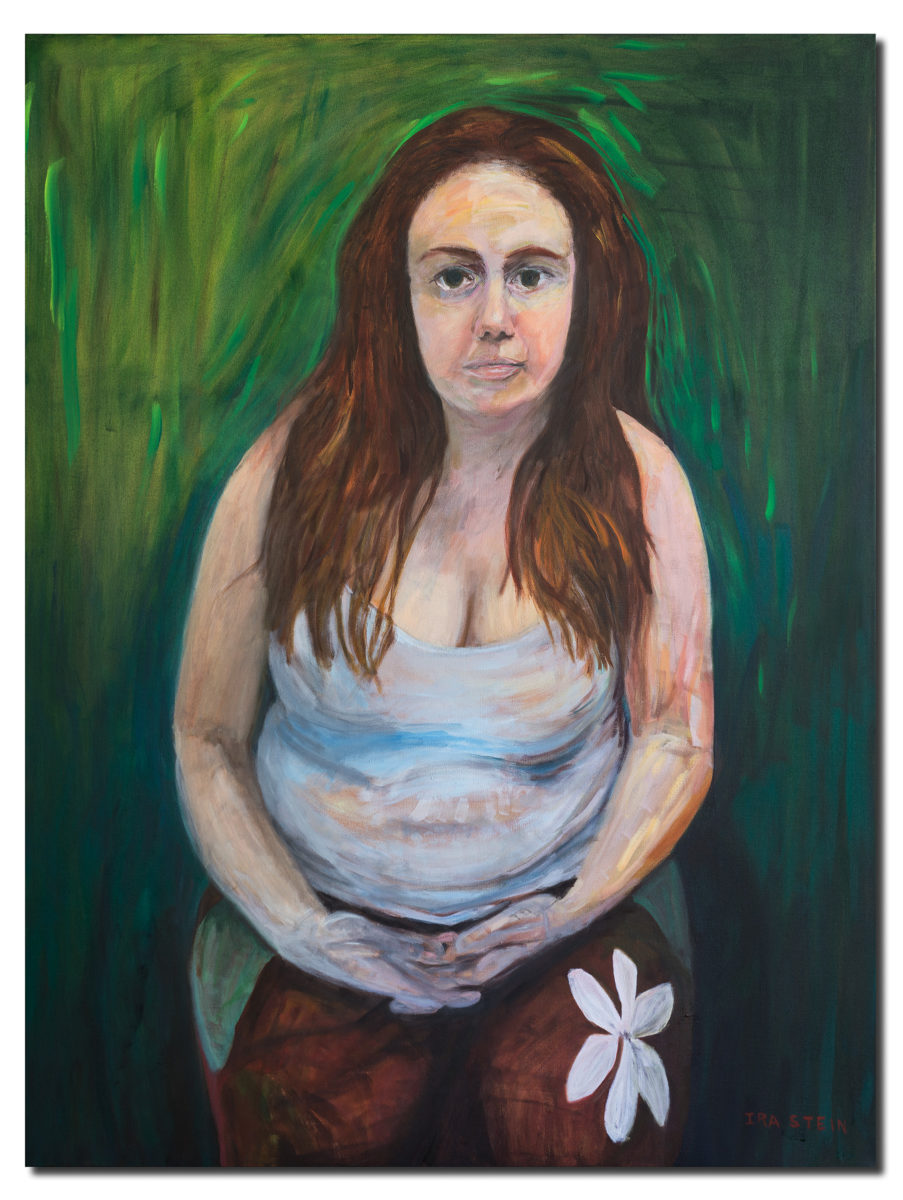
Tanya is from Tahiti – what I call the Devil’s Island. She told me that there is a lot of mental illness on the island that is most likely a result of the rampant incest that goes on there. Several months into our talks, Tanya told me that she saw her mother jump off a cliff committing suicide. Six months after her mother died, her father molested her in the shower.
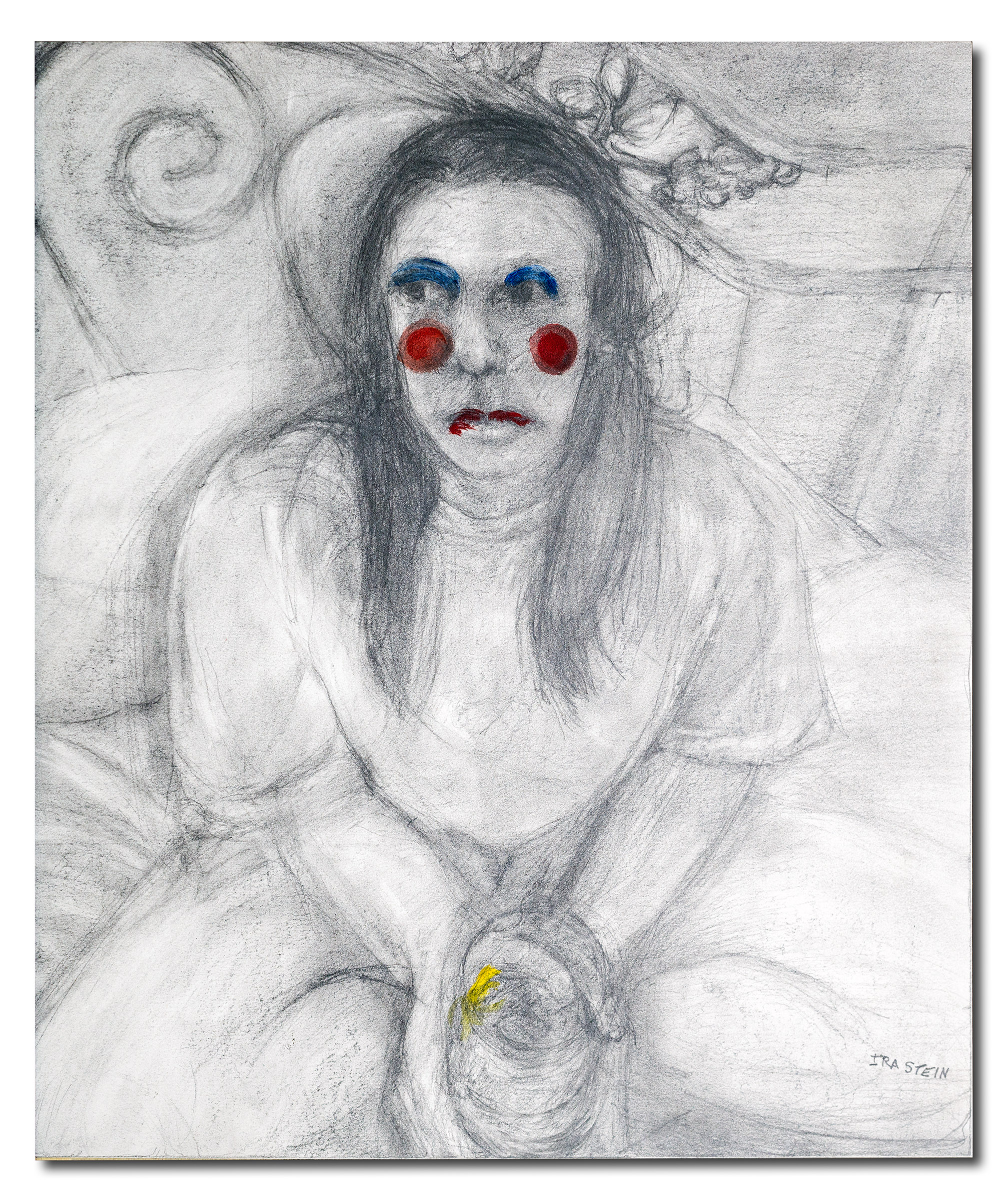
Tess is a bartender. Although very sweet and pretty, her relationships never lasted. She said she didn’t choose well. She seemed to be depressed often. As we talked, she told me her greatest fear was being alone. It haunted her. We both drank a lot. Vodka on the rocks with a lemon twist. The portrait depicts her sitting on a bed, crying, with a drink, telling me about the morning she woke up and found her underwear around her ankles. She was 8 and this was the first time she told the story. It was her father.

Toni was born in Sicily and for the first 27 years of her life she describes how her father beat her EVERYDAY! She never mentioned her mother. One day she had enough of the abuse and ran away. She was 27 and thought everyone was beaten by their fathers until she arrived in America.
She has a son but is not married. She struggles with the intense anger of realizing how much of her life was lost. She can’t seem to make any connection with men. She says, “I am very scared of men, they ruled my life for so long, I have no trust.”
My portrait of Toni shows her falling thru the cracks not able to grasp on to something that will stop her fall until just before hitting rock bottom she says to herself….. “OH MAN UP!” As a result, she is able to get on with her life. Not happily, but proceeding day by day.
Can you imagine inheriting her father’s genes?

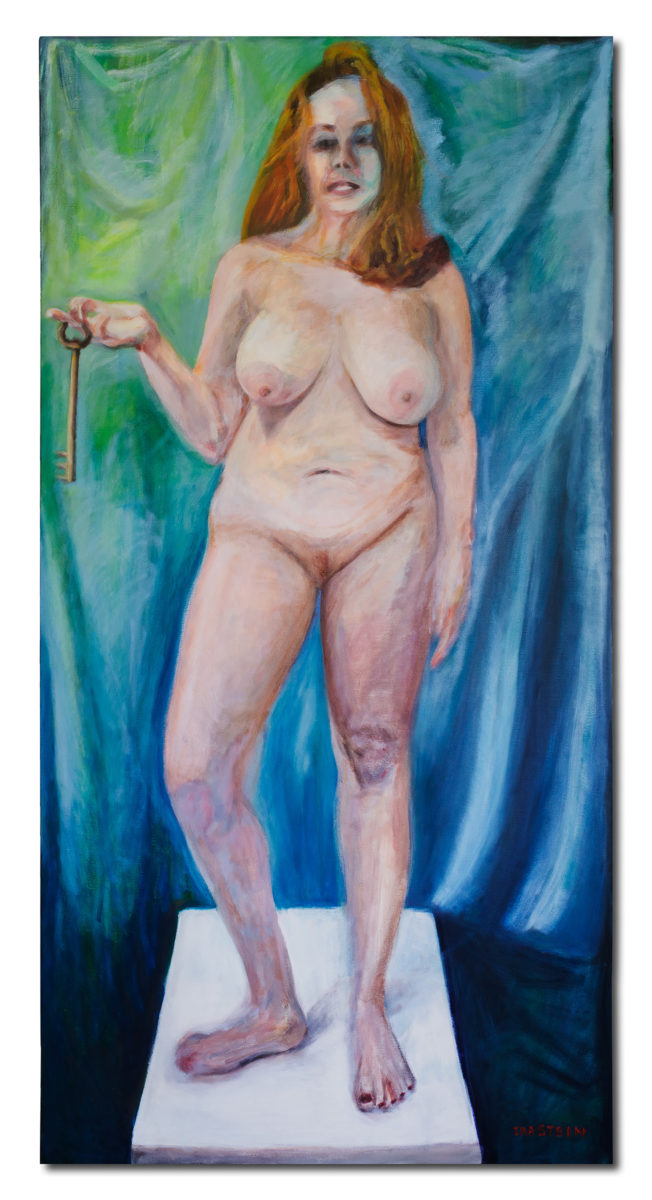
I found Lea online. She’s an escort. She loved my art project and wanted to participate. Lea became an escort because she would go out to dinner with a guy and was expected to have sex afterwards. It wasn’t working. “Why have sex with a guy just because he took me to dinner? I’m worth so much more than a meal and conversation. I’m going to charge them.” She says, “I love the power, I love the money, and I love the sex.” She feels unshackled and in control.


Clare is a physical therapist. We talked a lot about her genetic background and found that her behavior was a duplicate of her mother’s. Today they both talk about their issues freely with each other. She told me how she wishes she could explore her sexuality but without hurting the one she loves.


I wanted to do a project about sisters. Kathy and Melina wanted to participate because they thought it would help bring them closer. They loved each other but didn’t like each other. I could see in the process of choosing the pose how the older sister just seemed to take a uniquely protective position while the other sister just naturally assumed the role of the submissive one needing protection.
Several years earlier, Kathy killed someone while driving. I don’t think one can ever escape the memory of such a tragedy especially being the daughter of a very dominant and powerful mother and a submissive father.
Is your mother extremely dominant? Are you?
Do you have a weak father?

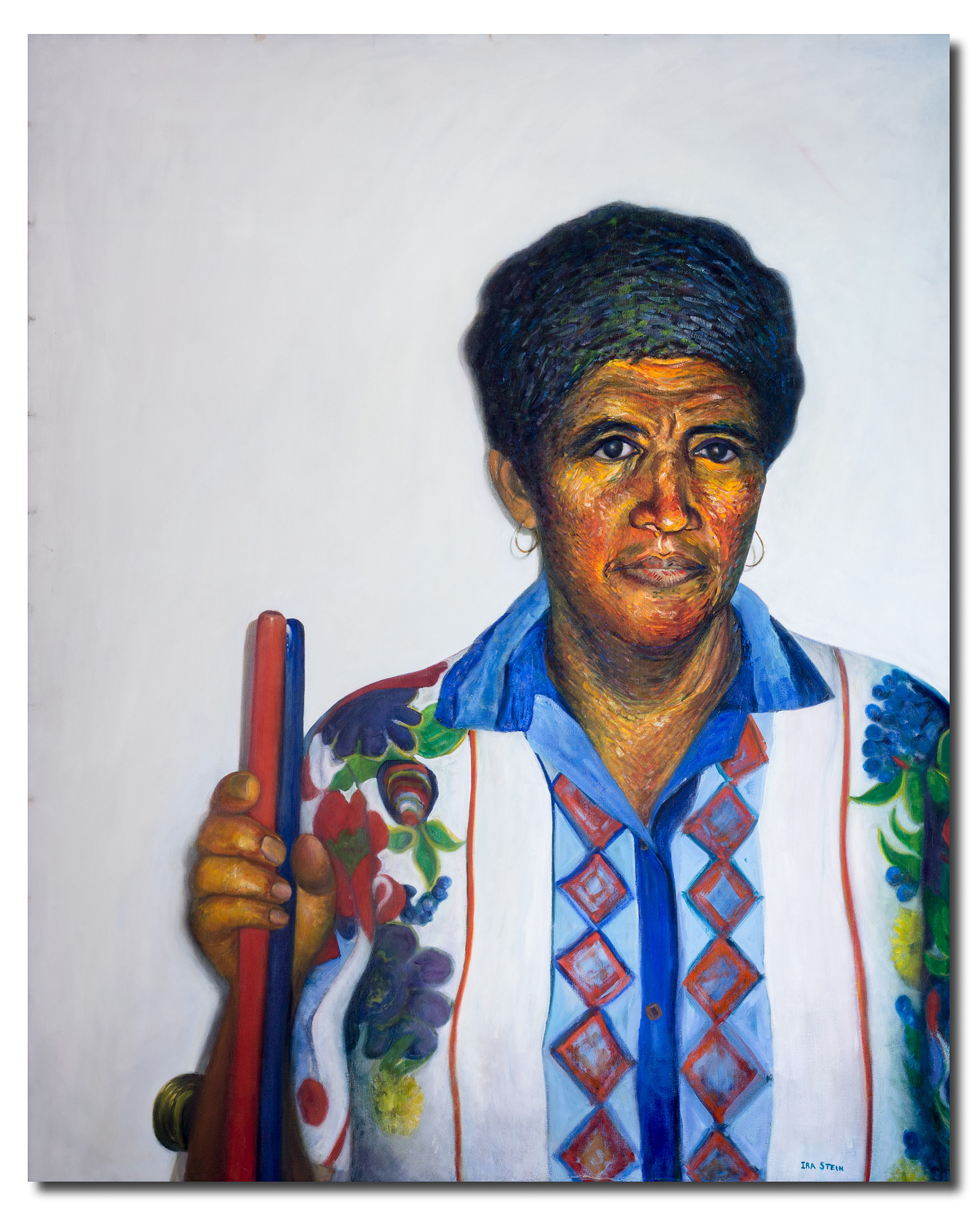
Featured in Apero August 2017 Catalogue
Evita cleaned the piss off my toilets for 35 years. It took her two hours each way by bus to get to my place. She had two boys with the common-law man she lived with. The boys were fully grown when he asked her to marry him. She was thrilled and said yes to him. The ceremony was beautiful. Full of people she loved and loved her. One week after the wedding she caught him fucking another woman.
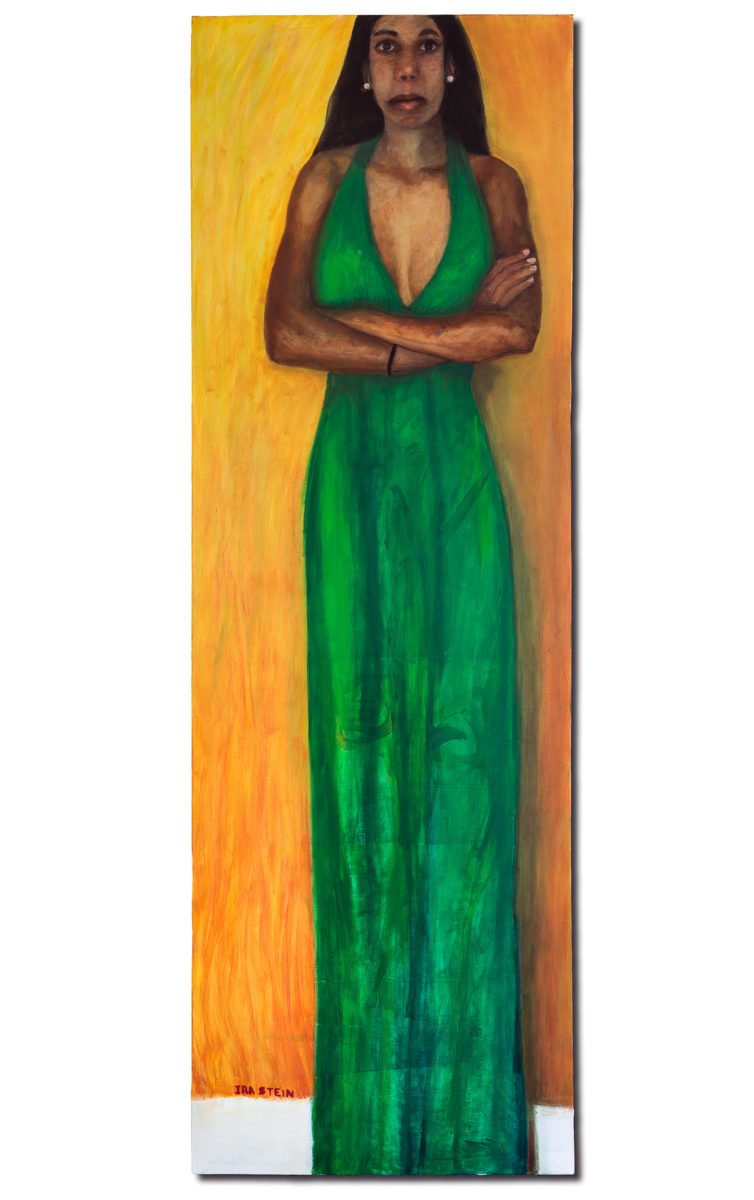
I met Lettie at one of my shows. My assistant told me of a girl in a green dress who wanted to meet me. In walks this breathtaking woman and the first thing I noticed was the dress was stained. She immediately became my model. We drank booze during each session. It soon became apparent that drinking was an issue and so were the men in her life.

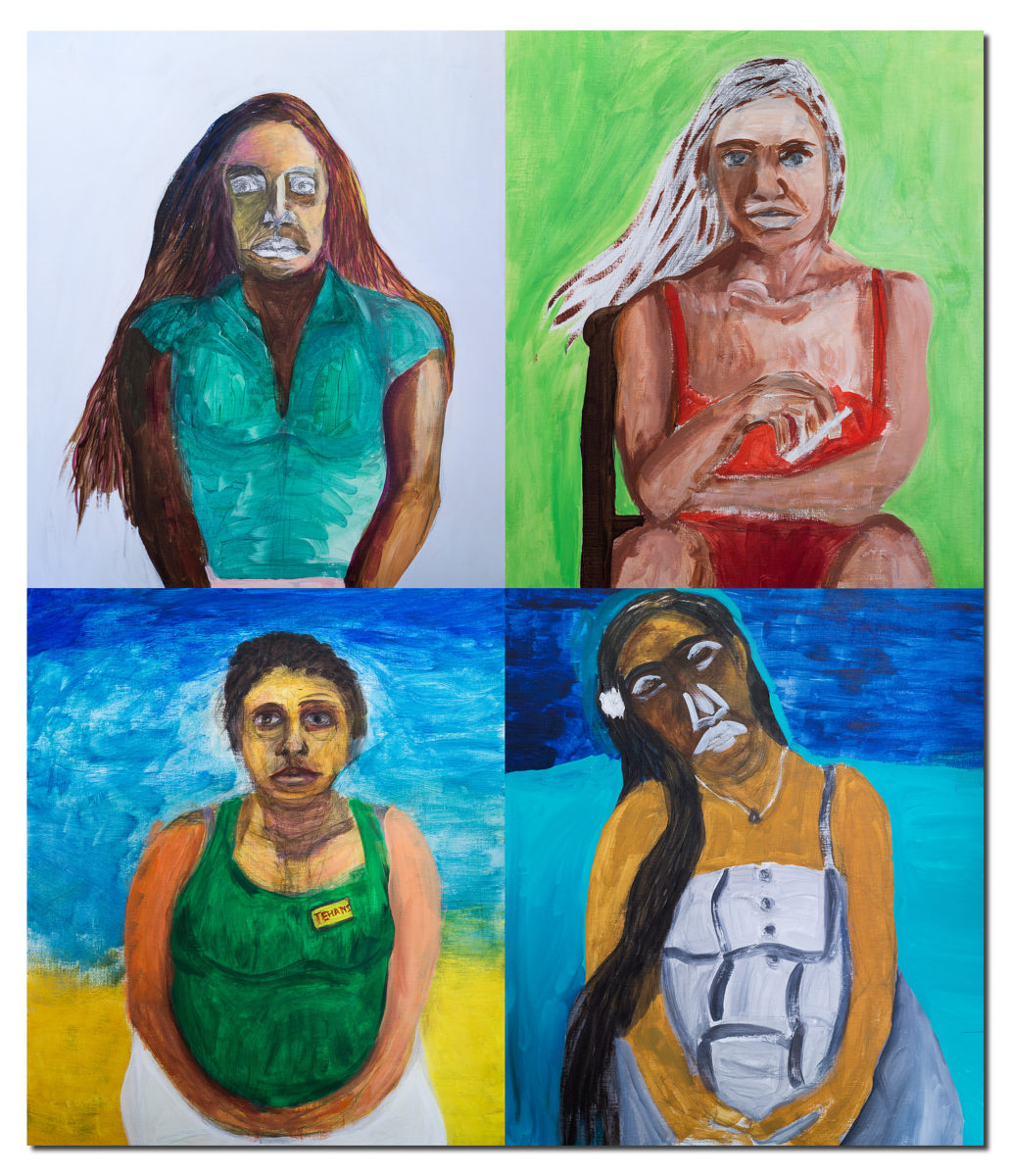
Moorea is always 82°, sun shining, light breezes, crystal water, PARADISE. The place is so fertile that you could stick your dick in the soil and it would grow. I spent a month on this island and worked with four models.
Model #1 is very sweet. She thinks her real father is her uncle. Doesn’t care.
Model #2 is beautiful and wild. She and her friends go out, drink beer, smoke, steal, and have sex every night. If she has a second baby, it is the custom to give it to your grandmother to raise.
Model #3 is pregnant with her second child. The first sperm donor beat her. To get even, she got pregnant from No.1’s best friend.
Model #4 is consumed by the island’s customs. She constantly participated in rituals that were hard for her to talk about. She had no life.
Each of these women told me about the incest on the island – it is the biggest issue not talked about to outsiders.

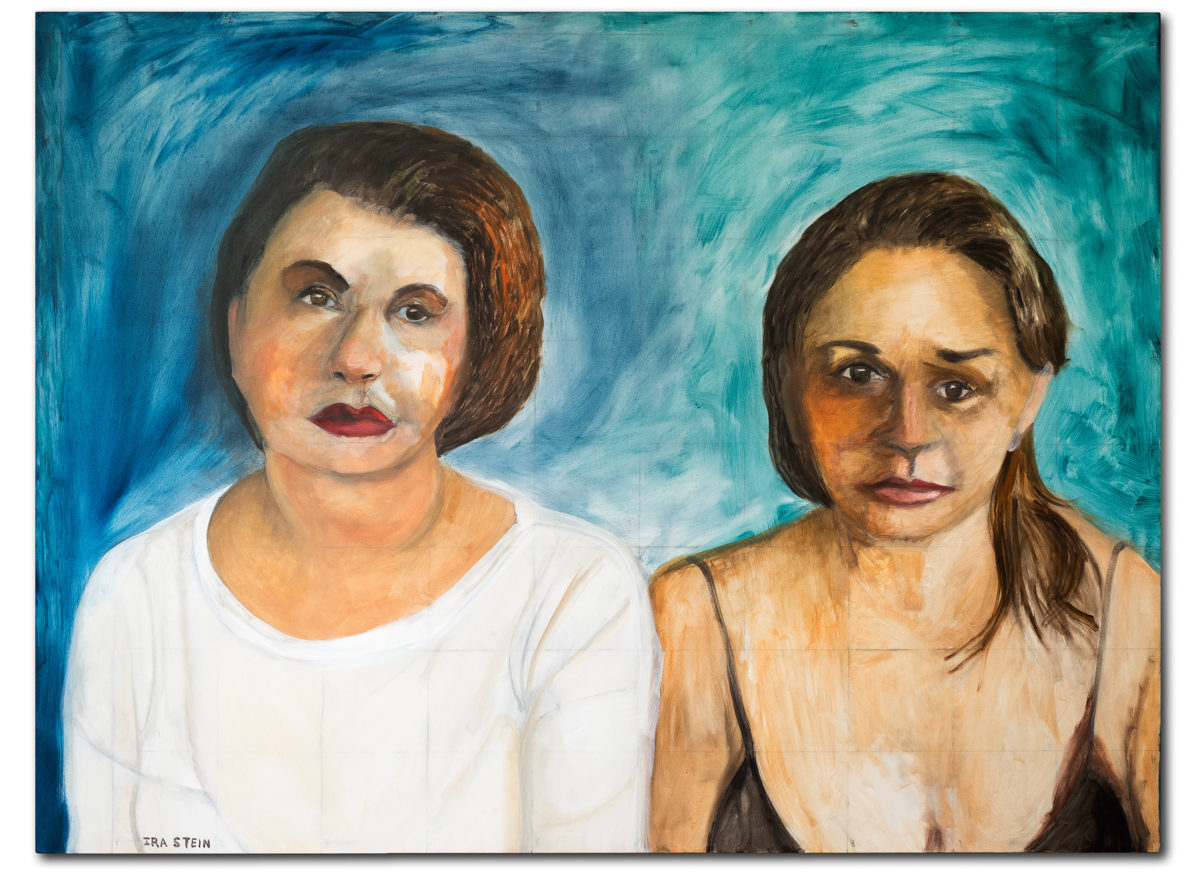
Suzanne and Kristy are sisters and are not close. They agreed to do the project together although I never knew why. Suzanne was the dominant and most accomplished of the two with a remarkable work history. Kristy was nothing like that. Kristy had a daughter living homeless in Vermont. Suzanne was married four times, no children and was currently single. I always wondered why they didn’t look anything alike.
One Christmas Eve, when they were younger their father committed suicide. Many years later Suzanne slit her wrists. Because it was so cold her bleeding slowed and her husband at the time was able to save her.
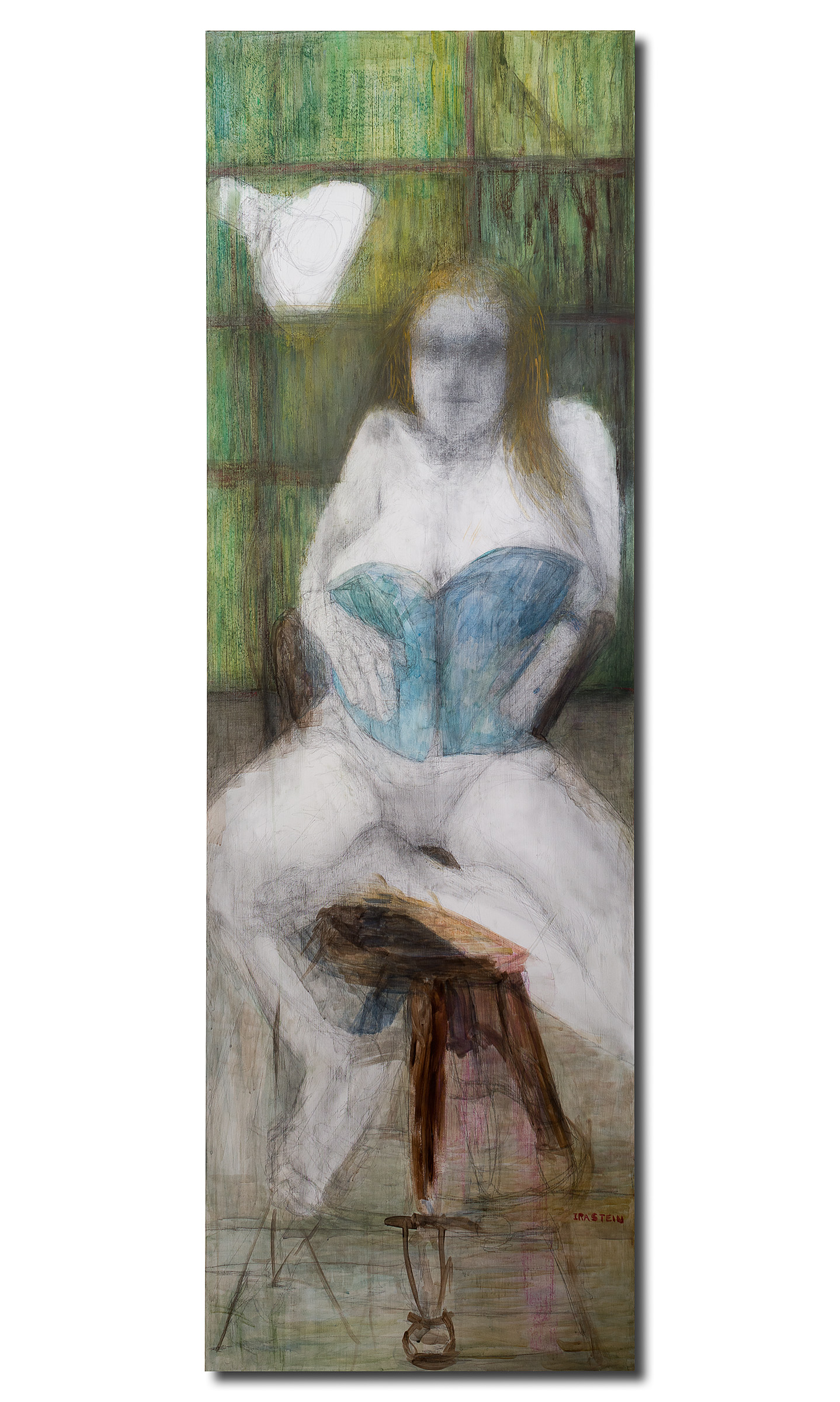
I met Sam when she was modeling for Laddie John Dill. She was a great model and I got to know her a little. I told her to come to the studio dressed in a way that she wants the world to see her. She arrived wearing a pale blue bustier and posed with one nipple sticking out, sitting on a stool, with her legs spread open, exposing her vagina. I felt that was not how she truly wanted to be seen. Sam’s eyes in this painting are where her story truly resides.

visit iGallery on Saatchi online